
STOP SOLVING THE WRONG PROBLEM
ChatGPT gives you macro-knowledge. Everyone gets the same answers.
MindrianOS finds the micro-knowledge -- the hidden causal chains, cross-domain analogies, and contradictions specific to YOUR problem.
A Brain calibrated on 100+ real ventures. A Data Room that thinks while you sleep.
$ Hover to explore. Click to learn more.
Four Jobs. One Thinking Partner.
Validate the problem before you build the solution
Know if the PROBLEM is worth solving before building
Data Room graded against 100+ real ventures
Meeting insights auto-routed with contradictions flagged
Causal chains with falsifiable predictions
Structure your thinking across domains
Cross-domain connections from fields you would never check
Scattered findings structured into a knowledge graph
Cause-effect chains with mechanisms and evidence
Larry picks up exactly where you left off
50 technologies. 50 Data Rooms. One partner.
Commercial potential assessed before licensing resources
Applications found in markets you would never check
Each technology in its own tracked Data Room
Full evidence chain from lab to market in one export
Learn methodology without being overwhelmed
Guided exercises at your pace
Honest feedback calibrated against real student work
Assumptions challenged before your professor does
See your progress, know exactly what is next
Same 66 commands. Same Brain. Same Data Room. Different starting depth.
Meet the Co-Founder
Who Never Sleeps
Larry doesn't tell you what you want to hear. He tells you what investors will ask -- before they do.
Built from 30+ years of teaching innovation at Johns Hopkins, Larry classifies your problem type silently, guides you to the right frameworks in the right sequence, and auto-files every insight into your Data Room.
Larry will push back on you. Push back on Larry. The best results come from the friction between your expertise and the methodology.
Try asking:
“Grade my venture”
Larry gives a brutally honest score calibrated against 100+ real ventures. No participation trophies.
THE BEAUTIFUL QUESTION
Five Engines Extracting
Micro-Knowledge
Macro-knowledge is what everyone knows. Micro-knowledge is what only YOUR data reveals -- the causal chain nobody traced, the analogy from a field nobody checked, the contradiction between two rooms nobody connected.
These five engines extract micro-knowledge from your Data Room continuously.
 CAUSAL REASONING
Trace WHY something works, not just THAT it works.
Extracts cause-effect chains with mechanisms, falsifiable predictions, and confidence levels from your Data Room.
"Semiconductor targeting works BECAUSE qualification timeline creates competitive moat, BECAUSE etch chamber downtime costs $2-5M/year." Larry traces the chain, identifies bottlenecks, and generates testable predictions.
 CROSS-DOMAIN ANALOGIES
Find structural matches in fields you would never check.
Uses TRIZ + SAPPhIRE to discover that your bio-sensor problem was solved in semiconductor inspection 10 years ago.
The Brain's 23K+ node graph maps structural similarities across 275 frameworks. Dark matter detection techniques applied to water purity -- real example from the graph.
 HIDDEN CONNECTIONS
Your pricing model contradicts your market analysis. Larry finds it.
12 edge types (INFORMS, CONTRADICTS, CONVERGES, ENABLES, INVALIDATES, CAUSES, and 6 more) detect relationships across your entire Data Room.
Every artifact you file builds connections automatically. A meeting insight enables something in your solution design. A financial assumption contradicts your competitive analysis. Larry surfaces what humans miss.
 MEETING INTELLIGENCE
File a transcript. Get structured intelligence back.
Processes meeting transcripts, identifies speakers, classifies segments, extracts action items, and detects convergence patterns across meetings.
Zoom call with a researcher? File the transcript. MindrianOS extracts every data point, routes insights to the right room sections, and flags contradictions with previous meetings.
 PROACTIVE INTELLIGENCE
Your room spots its own blind spots.
Detects gaps, contradictions, and convergence across room sections. Runs scheduled scans for competitors, grants, and domain news.
Surfaces signals you did not ask for. On Cowork, daily briefings generate automatically. Prediction deadlines tracked. Grant opportunities discovered overnight.
Bank of Opportunities
Not one idea. A portfolio of problems worth solving -- each one explored, connected, and ranked. These are the micro-knowledge operations that build it.
Hidden Connections
Contradictions between room sections nobody noticed
Grant Discovery
Grants.gov API scanned against your room context overnight
Funding Opportunities
Non-dilutive funding matched to your venture stage
Competitor Analysis
Scheduled web scans for competitors in your domain
Cross-Domain Analogies
Structural matches from fields you never checked
Causal Chain Tracing
Because...because...because chains with mechanisms
Prediction Tracking
Falsifiable predictions with deadlines and outcomes
Domain News
Context-relevant developments filed to room/intelligence/
Meeting Intelligence
Transcript to structured insights in 60 seconds
Convergence Detection
Themes appearing in 3+ room sections surfaced
Assumption Cascades
One change ripples through connected claims
Bottleneck Detection
Reverse salient analysis finds the lagging component
Investment Thesis
Graded against 100+ real ventures with percentile
Six Thinking Hats
6 persistent perspectives with cross-session memory
Daily Briefings
Room state, deadlines, contradictions every morning
Investor-Ready Export
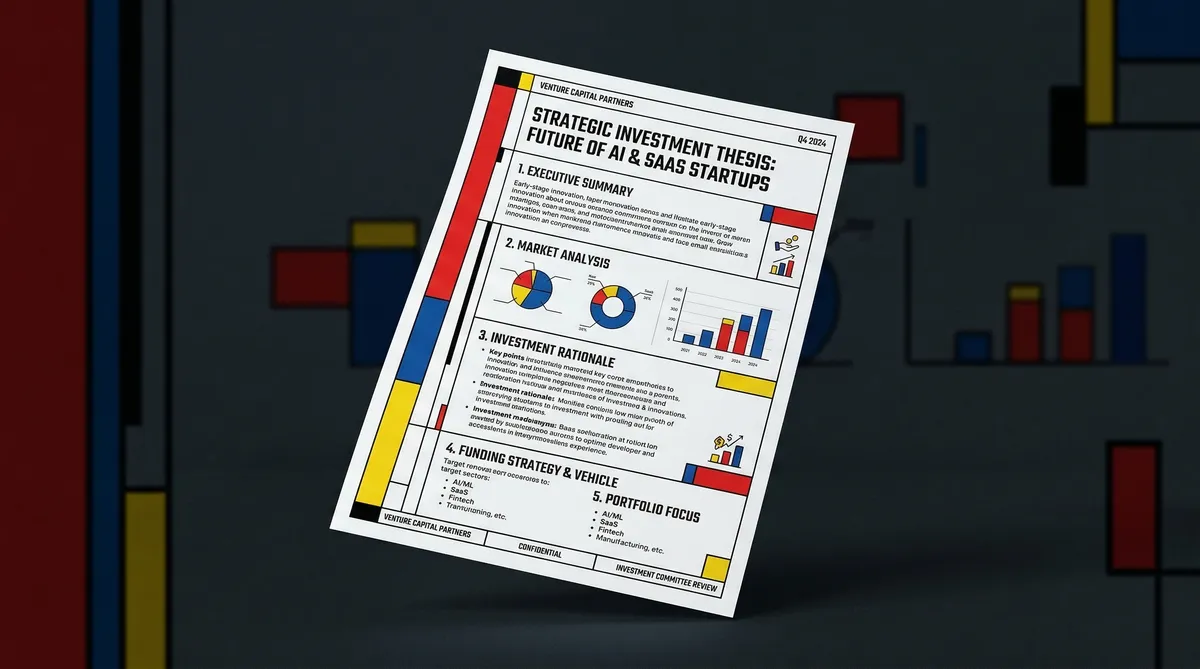
De Stijl thesis, deck, and profile from your Data Room
How the bank builds
Volume
Explore
Select
Convert
Grow
For TTOs: Each technology gets its own Data Room. MindrianOS runs the full cycle on 50 technologies simultaneously. Each one building its own Bank of Opportunities.
“You are constantly looking for opportunities.” -- Prof. Lawrence Aronhime
23,000+ Nodes Walk
Into a Graph
The Brain is the micro-knowledge engine. It does not just know frameworks -- it knows which frameworks to chain, in what sequence, for YOUR specific problem type. Calibrated on 100+ real ventures at Johns Hopkins.
Macro-knowledge: “Use PEST analysis.” Micro-knowledge: “Use PEST, then systems thinking, then find analogies in semiconductor manufacturing -- because your problem structure matches.”
--
Real ventures graded -- your score means something
--
Of teaching data -- not internet averages
--
Frameworks mapped -- Brain knows which one you need next
The plugin's folder structure IS the architecture. No framework code needed. Based on Van Clief & McDermott (2026): when AI agents read markdown files in folders, the folder hierarchy becomes the orchestration logic.
arXiv:2603.16021v2
--
OF STARTUPS FAIL BECAUSE
THERE WAS NO MARKET NEED
Source: CB Insights, Top Reasons Startups Fail
3 months of building. Then investors tell you what Larry would have told you on day one.
You have a venture idea. You talk to ChatGPT. It says “great idea, here are some things to consider.” You feel productive. Three months later, you realize you were solving the wrong problem the whole time.
The issue isn't information. It's that nobody challenges your thinking until investors do. Nobody asks if you've validated the problem before you built the solution. Nobody grades your evidence separately from your vision.
“We can already do good things for people who are trying to find ideas that they did not have before.”
-- Prof. Lawrence Aronhime, Johns Hopkins University
So what does a real methodology look like?
4 Weeks. One Venture.
Zero Wasted Months.
PWS is an innovation methodology developed by Lawrence Aronhime over 30+ years at Johns Hopkins. It doesn't dump frameworks on you. It walks you through a sequence -- each week builds on the last.
Find the problem worth solving
Stop building for imaginary customers. Validate that real people have this pain -- and will pay to fix it.
Know your customer better than they know themselves
Map needs, behaviors, and jobs-to-be-done. Your assumptions get tested against evidence, not opinions.
Build what actually gets funded
Design a solution informed by validated understanding. Not what you want to build -- what the market needs.
Have the pitch that makes investors lean in
Structured evidence, graded work, cross-domain connections. Your case is built on data, not slides.
Each step feeds the next through your Data Room
Room artifact connects each step -- no manual copy-paste
Never Lose an
Insight Again
Every meeting, every framework, every connection -- automatically filed, connected, and queryable. Your venture's memory is better than yours.
Scattered notes across 3 apps, no follow-ups tracked, insights lost in a thread
Structured filing with action items, contradictions flagged, linked to your venture graph
You manually re-read old notes hoping to spot a pattern
Knowledge graph surfaces relationships: your pricing contradicts your market analysis
You assume A causes B but never test the mechanism or check for confounders
Causal chains with mechanisms, falsifiable predictions, and confidence levels -- traced through your Data Room
Manual grant searches on generic databases, missing deadlines, wrong domain
Grants.gov scanned against your room context overnight. Relevancy scored. Filed with provenance.
Copy-pasting from docs into a slide deck at 2am
Professional De Stijl thesis, deck, and profile generated from your room -- investor-ready
When You Need Help,
They Already Started.
8 agents. Each one solves a specific job you used to do manually.
Larry
Brain Agent
Grading Agent
Research Agent
Investor Agent
Persona Analyst
Connection Finder
Opportunity Scanner
Two Graphs. One Micro-Knowledge Engine.
The Brain teaches Larry HOW to think. Your Room teaches Larry WHAT to think about. Together, they extract micro-knowledge that neither could find alone.
Which framework to use next. How to grade your work honestly. Where unexpected parallels hide between your domain and fields you'd never think to check. Built from 30 years of real teaching.
Brain -- optional, makes Larry significantly smarter
Every artifact you file builds connections. Your pricing model contradicts your market analysis? Larry finds it. A meeting insight enables something in your solution design? It's linked automatically.
Always on -- grows with your venture, stays on your machine
One Plugin. Three Surfaces.
> /mos:act
Stop Googling Which
Framework to Use
Larry has 79 frameworks mapped in a graph. He picks the right one. You just describe your problem.
“I have a medtech device that could serve three different markets. I don't know which one to go after first.”
Larry selects 3 frameworks from the graph:
Result: You have a market selection rationale backed by evidence -- not a gut feeling. Filed in your Data Room. Ready for investors.
79 Built-In Frameworks
Jobs to Be Done from Christensen. Six Hats from de Bono. Scenario Planning from Shell. Reverse Salient from Hughes. Minto Pyramid from McKinsey. Each one is a structured thinking tool, not a prompt. Larry chains them based on your problem type.
Add Your Own
Enterprise users can add proprietary frameworks to the system. Your methodology becomes a first-class command, with Larry teaching it and the Data Room filing its output. Your IP stays yours. The system just gets smarter.
Look Like You Have
a Team of 10
Professional PDFs, visual dashboards, pitch decks -- generated from your room in seconds. De Stijl formatted. Investor-ready.
Numbers that matter
$--
Mobilized through methodology
--
Knowledge nodes in the Brain
--
Frameworks connected and chained
--
Real ventures graded and calibrated
“It understood when you said macro trends, that PEST was the way to go. I didn't tell it to do that. It's trying to help you by thinking multiple steps ahead.”
Prof. Lawrence Aronhime, Johns Hopkins University
“A researcher just feeds it his research, and it opens up a world of possibility for commercialization. The major one is TTOs -- this is where we really shine.”
Jonathan Sagir, MindrianOS
“I used MindrianOS for both grant applications. And I won both of them.”
Leah Aronhime, Grant Recipient
Free forever. Brain makes it smarter.
Compare Pricing TiersReady in 30 Seconds.
Free Forever.
Calibrated on 100+ real student ventures at Johns Hopkins.
$ Larry starts talking. The Room starts listening.